Breaking: Strategists warn of AI price reset after historic tech stock crash
Experts advise stability before buying as the Nasdaq enters correction territory following a 5.5 percent drop.
By Madison Cooper ·
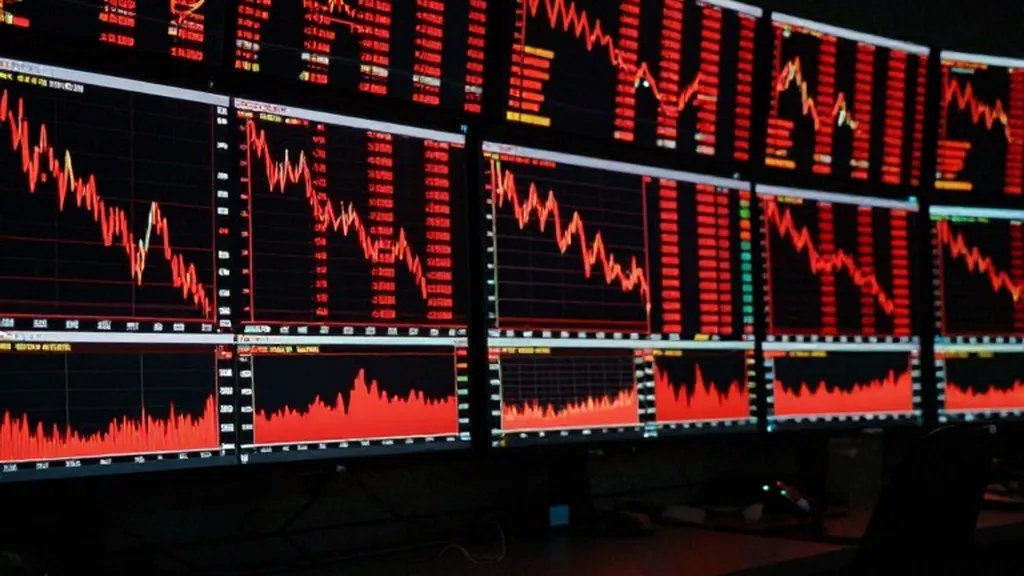
Wall Street strategists are urging caution after a historic sell off in technology stocks, warning that the market may be undergoing a fundamental reevaluation of the artificial intelligence trade. The Dow Jones Industrial Average fell more than 1,800 points on Thursday, a drop of 3.4 percent, to 51,868. The S&P 500 declined 4.3 percent, marking its worst day since April 2025. The Nasdaq Composite suffered a 5.5 percent decline, its steepest drop in 18 months, and closed more than 11 percent below its recent record. This decline places the index in correction territory, defined as a fall of at least 10 percent from a recent high. An estimated $2.5 trillion in market value was wiped from the Nasdaq Composite. The selling pressure spread across every sector of the S&P 500 and gathered pace throughout the trading day.
For local readers and small investors, a day like this represents a significant and sudden reduction in the value of retirement accounts and savings tied to the stock market. When the Nasdaq drops sharply, the funds managed by many 401(k) plans and individual brokerage accounts see their balances decrease overnight. This type of volatility is common in markets that have risen rapidly, but the speed of the decline on Thursday was notable. The Philadelphia Semiconductor Index, which tracks 30 of the largest chip companies, fell more than 12 percent. It has now dropped more than 30 percent since the beginning of October. The iShares Semiconductor ETF, which tracks the sector, fell 12 percent, its worst single day since March 2020. This decline affects the broad range of technology stocks that make up a large portion of many diversified investment portfolios.
Neil Wilson, an investor strategist at Saxo UK, described the situation as a complete capitulation level event playing out in tech stocks. He noted that the fear is a total momentum unwind as Democrats pace the frontier and kibosh data center buildout. Wilson said the situation looks totally overdone but the nature of sell everything in this market means we need to look for some stability first. This perspective suggests that while the drop may be severe, it is not necessarily the time to rush back into the market until prices stabilize. For savers, this implies that the immediate future may involve further fluctuations before a clearer direction emerges. The advice is to monitor the market for signs that selling pressure is exhausting itself rather than assuming the bottom has been reached.
Dan Ives, a tech analyst, emphasized the political hurdles that lie ahead. He stated that there is no way to sugarcoat that Democrats taking control, especially over the Senate, will create some major hurdles for AI and tech legislation in the Beltway over the next two years. Ives said the midterm results are a clear sign the pace of data center build out will start to slow. This political shift is a key driver of the current anxiety. Investors are worried that new state level restrictions could slow the construction of data centers, which are central to the AI infrastructure boom. The uncertainty about how fast these facilities can be built adds to the pressure on technology companies that rely on continuous expansion to justify their high valuations.
Ted Parkhill, founder and chief executive of Incline Investment Management, offered a different angle on the current market sentiment. He said the market is moving from the promise of AI to the price of AI. Parkhill noted that there is no question that AI is going to be transformative for the world in the long run. However, he added that this does not mean every AI related stock is currently priced appropriately. He predicted there is going to be a lot of turmoil. This view highlights a shift from speculative growth to a focus on financial performance. For investors, this means that companies with strong earnings and clear paths to profitability may fare better than those relying solely on future potential. The market is beginning to demand proof of returns for the massive sums of money already invested in the sector.
Gene Goldman, chief investment officer at Cetera Financial Group, offered a more optimistic outlook on the timing of a recovery. He said the sell off had become exaggerated as selling accelerated through the day. Goldman predicted a recovery, stating that when you have a correction in a bull market they are typically short lived. He added that it is ugly right now but we do think we will see a bounce back soon. This perspective aligns with historical patterns where sharp declines in a generally rising market are often followed by rebounds. For long term investors, this suggests that the current drop may be a temporary setback rather than the start of a long term decline. However, the term exaggerated implies that the current prices may not fully reflect the underlying value of the companies involved.
Historical context was provided by reviewing 10 Nasdaq corrections over the last decade. The review found that sell offs in 2025, 2022, 2020 and 2018 were followed by further rough selling over the next month. However, the Nasdaq was back in rally mode six months later in every case except 2022. On average, the Nasdaq gained 9.41 percent in the three months after a correction bottom and 17.03 percent over six months. The January 2022 correction was the exception, as the Nasdaq lost another 18.3 percent over the next six months. This historical data suggests that while short term pain is likely, long term recovery is probable for most investors. The key is to understand that the path to recovery is often volatile and not immediate.
More Business · Scam Watch · Report a business · Got a Story?