California Republicans lose nine state seats, ceding historic Democratic supermajority
A 28-year-old newcomer and first-time candidates defeated incumbents in key districts, deepening divisions within the GOP leadership ahead of the 2028 cycle.
By Sophia Bennett ·
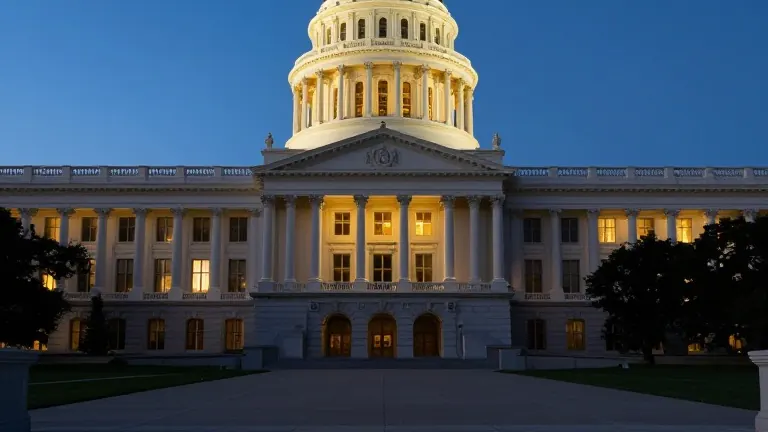
Democrats seized nine of the 29 seats held by Republicans in the 120-member California Legislature, creating the largest Democratic supermajority in 150 years. The losses occurred across a wide geographic range, from the San Joaquin Valley to the Palm Springs area and Orange County. In one district, a 28-year-old Democrat with a thin campaign resume unseated the Republican Assembly leader. In another, a first-time candidate defeated a two-term Republican incumbent who had significant fundraising backing.
The sweep extended to every statewide office, including the Board of Equalization. This outcome continues a trend dating back to 2010, when Jerry Brown succeeded Arnold Schwarzenegger. Statehouse leaders were surprised by the magnitude of the upset but agree that internal divisions within the Republican Party contributed to the losses. Experts cite the nationalization of down-ballot races as a primary driver. GOP strategist Duane Dichiara said voters were sending a message to Republicans, noting that media focus on federal leaders makes it difficult for state-level candidates to differentiate themselves.
Eric McGhee of the Public Policy Institute of California noted that voters respond more to national party feelings than local delivery. The state Republican Party faced structural conflicts that weakened its campaign efforts. Assembly and Senate leaders broke a longstanding joint fundraising agreement with party chair Corrin Rankin shortly after she took office in March 2025. They directed lobbyists to donate to the Legislative Action PAC, an independent super PAC, instead of the party. Between January and mid-October, the state party spent less than half of what the Legislative Action PAC raised, according to campaign filings.
San Diego Assemblyman Carl DeMaio, who leads the Reform California organization, called the state party a "complete dumpster fire." DeMaio’s group courted tens of thousands of small donors that might otherwise have supported the main party effort. Rankin announced last week that she will not seek reelection after her term ends in February. Tony Strickland, a Huntington Beach Republican who lost his bid for the state Senate, is currently favored to succeed her among several candidates. Rankin wrote on social media that the party cannot afford to be fractured by "rogue organizations, grifters, and selfish commentators."
The new legislative balance leaves Republicans with limited power to block tax or urgency measures. The delegation would need 15 more members in the Assembly and six more in the Senate to reach that threshold. Assembly Speaker Robert Rivas’s spokesperson, Nick Miller, declined to discuss how the 12 remaining Republicans will be distributed across the 32 standing committees. All committees have traditionally had a Republican vice chair. Former Assemblyman Tom Lackey, a former California Highway Patrol officer from Palmdale, said Democrats will have fewer reasons to consider the victim’s perspective in public safety debates. Public safety committee chair Nick Schultz, a Burbank Democrat, acknowledged Lackey was a "value-add" but noted that Democrats diverge on public safety issues.
Political scientists warn that the reduced opposition may lower the incentive for Democrats to fix pressing issues. Eric Schickler, co-director of UC Berkeley’s Institute for Governmental Studies, said competition pressures politicians to deliver. Thad Kousser, a professor at UC San Diego, noted that lawmakers face pressure not to vote against party colleagues, which may reduce aggressive screening of bad policies. Napa state Sen. Christopher Cabaldon argued that Republicans have failed in their opposition role by following the president blindly, though he cited Roseville Sen. Roger Niello as an exception. Niello, who became Senate Republican leader on Nov. 5, barely held his seat, defeating Democratic challenger Sean Frame by about 5,000 votes. He said the party will focus on quality candidates for the 2028 cycle.