Global Trade Tensions: Trading Partners Challenge New U.S. Tariffs
Fourteen major economies, including China and the European Union, formally objected to proposed import duties that are set to take effect in early 2027.
By Sophia Bennett ·
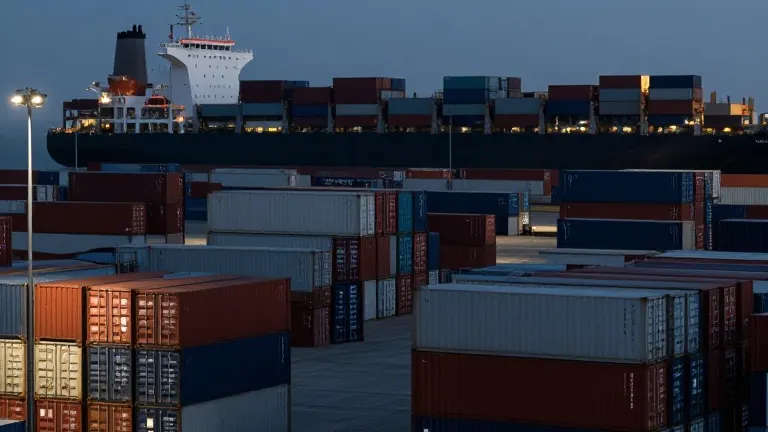
Fourteen of the largest U.S. trading partners formally challenged new tariff plans on Thursday, rejecting the administration's premise of excess manufacturing capacity.
The duties, which were announced Wednesday, stem from a Section 301 investigation conducted over several months. They are designed to replace tariffs that a February Supreme Court ruling invalidated. The new measures are scheduled to take effect in early 2027.
U.S. Trade Representative Jamieson Greer stated that the practices of the 14 targeted economies regarding excess capacity were unreasonable and burden U.S. commerce. China faces a base tariff of 20%, with the possibility of doubling to 40% if Washington determines Beijing is not engaging adequately.
Guo Jiakun, spokesperson for China's Ministry of Foreign Affairs, called the overcapacity claim a false premise at a press briefing. He said China opposes using the issue as a pretext for political maneuvering and warned that tariff wars serve no one's interests.
Japan, which faces tariffs of up to 15%, told Washington it does not have nonmarket policies or structural excess production capacity. Chief Cabinet Secretary Minoru Kihara described the announcement as regrettable and confirmed that Japan's position has been conveyed to the U.S. side.
Other Asian nations expressed varying levels of dissatisfaction. Singapore, facing up to 20% tariffs, said it was very disappointed and noted its policies do not subsidize manufacturing for export. Malaysia claimed it lacks excess capacity, while Vietnam, facing up to 35%, said it is working on a trade deal with the U.S. Thailand, facing a cap of 18%, called the proposal more favorable than expected and plans to continue negotiations.
The 27-nation European Union rejected the idea that Europe is a source of structural overcapacity and pointed to the lack of joint action with the U.S. The bloc could face a 15% tariff. Stephen Brown, chief economist at Capital Economics, noted that the new tariffs largely replace earlier forced labor duties from July, though he warned they will likely push prices higher and keep core goods inflation firm into next year.
More Business · National news · Scam Watch · Report a business · Got a Story?