Manhattan M42 Bus Hits Record Low of 4.78 mph
The MTA route running along 42nd Street posted the city's lowest average speed for the second straight year in a new performance report.
By Madison Cooper ·
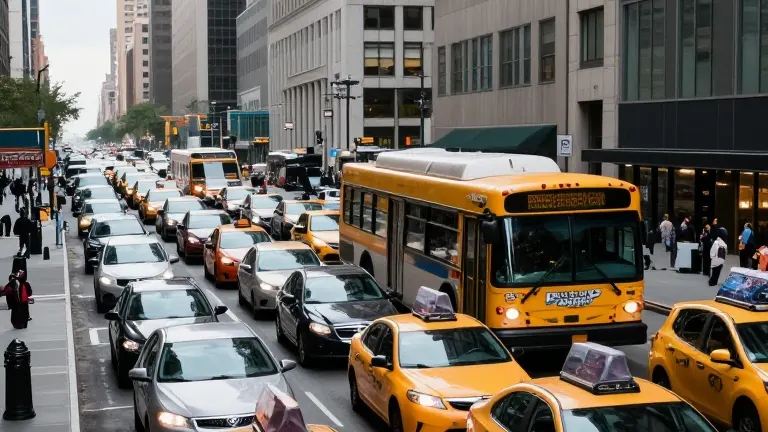
The M42 bus route on Manhattan’s 42nd Street moved at an average speed of 4.78 miles per hour during the latest review period, according to data released by the Straphangers Campaign of NYPIRG and the MTA’s Permanent Citizens Advisory Committee. The figure marks a new low for the city’s slowest local transit line, dropping from 5.05 miles per hour recorded in the previous year’s report.
The route claimed the Pokey Award for the second consecutive year in the 19th edition of the group’s annual performance study. The analysis covers local bus lines that carry at least 5,000 passengers per day. At 4.78 mph, or 7.69 kilometers per hour, the vehicle travels slower than a person walking at a casual pace.
The M42 travels east to west across Manhattan, connecting the United Nations complex on the East Side to the 42nd Street West pier near the Hudson River. The path cuts through Midtown, passing landmarks such as Grand Central Terminal, Bryant Park, and Times Square. It serves residents, workers, and tourists who cross the island without using the subway.
The report attributes the sluggish pace to heavy traffic and a lack of dedicated bus infrastructure. Unlike the M14A+ on 14th Street, which operates within an exclusive bus corridor with all-door boarding, the M42 shares its lane with cars, taxis, trucks, and delivery vehicles. The study notes that 42nd Street lacks a comparable protected lane, forcing the bus to compete constantly for road space.
Additional delays stem from double-parked vehicles and blocked bus lanes, which prevent enforcement of traffic restrictions. These obstacles require drivers to stop or slow down frequently. The MTA Bus Time description confirms the route’s utility for crossing the island but acknowledges the congestion that defines its daily operation.
NYPIRG and PCAC recommend expanding exclusive bus lanes and improving surveillance to prevent other vehicles from blocking them. They also suggest using technology to give buses priority at traffic signals. The group argues that prioritizing public transit in street design is the primary solution to improving speeds on congested routes like the M42.