Mississippi Lawmakers Debate Merging Community College Districts
A bill to merge six districts into three died in committee, but the question of whether Mississippi can sustain 23 public institutions remains open.
By Sophia Bennett ·
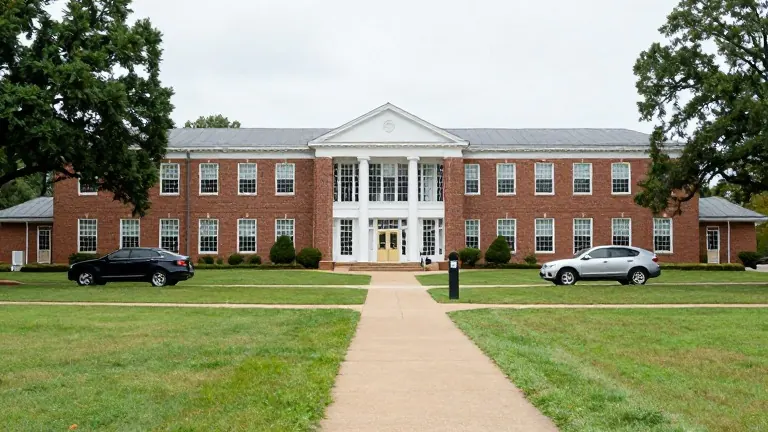
Mississippi's community college system began with a promise that students could reach a classroom without traveling far from home. That principle is now at the center of a legislative debate over the state's 15 community college districts and eight public universities. Lawmakers are weighing whether to consolidate districts, tie funding to performance, or leave the structure intact.
Rep. Trey Lamar, a Republican from Senatobia, introduced House Bill 1284 in January. The bill would have merged Coahoma Community College with Mississippi Delta Community College, Meridian with East Mississippi, and Southwest Mississippi with Copiah-Lincoln. It would not have closed any campuses. Instead, it sought to reduce administrative costs by cutting the number of districts from 15 to 12. Lamar said any savings would be returned to the community college system.
The measure died in committee. Rep. Donnie Scoggin, a Republican from Ellisville who co-chairs the House consolidation committee, said there was not enough time to study the issue. "We didn't want to do anything that was rushed and just start closing colleges," Scoggin said. "But now we're taking time to examine all factors to make informed and better decisions."
Population declines have added pressure to the discussion. Coahoma County had 26,000 residents in 2010 and 21,000 a decade later, according to Census data. Sunflower County, home to Mississippi Delta Community College, lost 4,000 people over the same period. Some property owners also pay taxes to support overlapping districts. Meridian Community College serves Lauderdale County, which falls within East Mississippi Community College's six-county district.
Students organized against the bill. Cole Cooksey, a sophomore studying pre-political science at Southwest Community College, launched an online petition on Jan. 23 titled "Stop The Progression of House Bill 1284." It drew more than 330 supporters in its first day and 750 by the time the bill died. Cooksey said he wanted to raise awareness about the value of the state's oldest public college system. "Community colleges help fill in the gaps of support and education that high schools are not able to do and they fill in the gaps that universities refuse too," he said.
At the university level, lawmakers are considering how to allocate money. In June, trustees for the Mississippi Institutions of Higher Learning moved toward a funding formula that would link a portion of state money to graduation rates, student retention, and workforce outcomes. As of October, the board is still defining specific metrics and goals for the universities, and it is unclear when the formula will be fully implemented. Sen. Nicole Boyd, a Republican from Oxford, has pushed to tie state funding to graduation rates, job placement, and earnings.
Pernell Goodwin, vice president of Copiah-Lincoln Community College's Natchez campus, warned that consolidation could limit access for rural students. Longer travel distances would raise costs and make campus visits harder, he said. "It was to ensure that no matter where a student attends college, he is at least within a certain distance from his home to get to campus and access education," Goodwin said. Bruce Hanson, a former state representative, has also opposed closing or consolidating universities. As chair of the Citizens Coalition for MUW and Mississippi School for Mathematics and Science, he has sought to protect those campuses. "If these institutions disappear, where will the children in our community go?" Hanson said.