Breaking: GPU Math Behind Anthropic IPO: Why Your Subscription Funds the Data Center
With Anthropic preparing a multi-trillion dollar IPO, the economics of serving Claude users reveal a tight margin where hardware costs dominate the business model.
By Madison Cooper ·
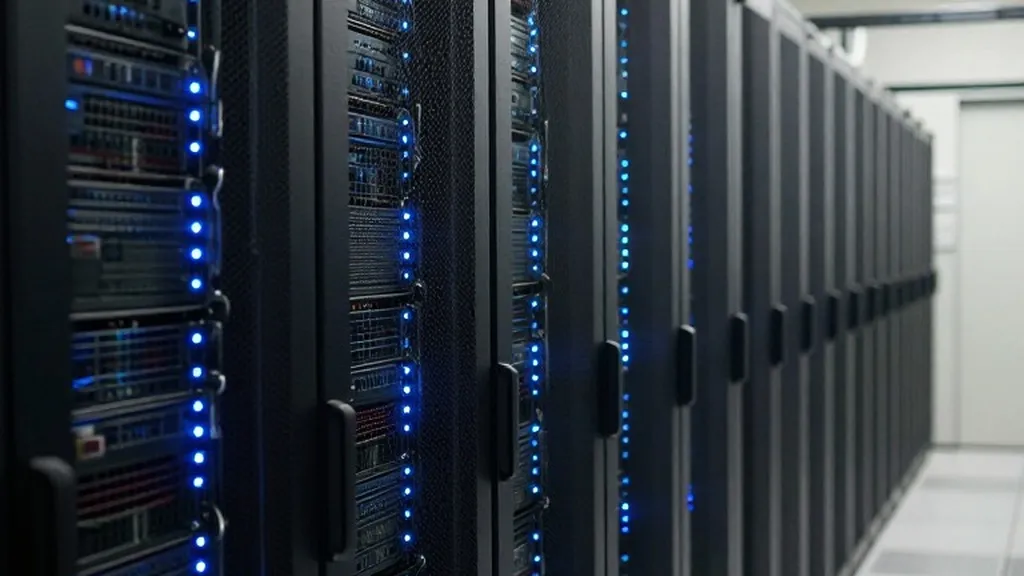
Anthropic, the developer behind the Claude family of artificial intelligence models, is preparing to go public in an initial offering that projects a valuation between 2.5 trillion dollars and 3 trillion dollars. This financial milestone arrives as the company navigates a complex landscape of massive compute commitments and a growing debate over who controls the future of artificial intelligence. The math behind the company’s valuation rests on the ability to scale its user base while managing the intense costs of the hardware required to run its models. For everyday users and local businesses, understanding the mechanics of this scaling is key to seeing what the IPO means for their subscriptions and the technology they rely on daily.
At the heart of the operation is the graphics processing unit, or GPU, which serves as the engine for running large language models. A single Nvidia RTX Pro 6000 card is the current standard for high-performance inference. According to working estimates, one of these cards can support about 15 to 20 light users who are running light compute tasks at speeds of 60 to 70 tokens per second. Alternatively, the same card can serve 1 to 2 heavy coding users who are running Claude Code at 40 to 50 tokens per second. These figures assume that the hardware is being used constantly, twenty-four hours a day, without interruption. This capacity defines the maximum throughput that a single piece of hardware can deliver to the market.
The financial reality of this capacity becomes clear when examining the price of the hardware itself. As of now, the RTX Pro 6000 retails at 20,000 dollars. This price tag does not include the cost of the servers, switches, central processing units, or the data center facility and electricity required to keep the machines running. When companies purchase these cards directly from Nvidia at a wholesale price of 3,000 to 4,000 dollars, the immediate cost is significantly lower, but the operational expenses remain substantial. The difference between the retail and wholesale prices highlights the margin that hardware vendors capture from the market, a dynamic that impacts the overall cost structure for AI providers.
For a heavy user on the maximum plan, the subscription cost is 200 dollars a month. A light user on a base plan pays about 20 dollars a month on average. If a company buys the GPU at the wholesale price, the card alone takes about 10 months of revenue from a single heavy user to pay back. The same ten-month payback period applies if the card is serving 15 to 20 light users at 20 dollars a month. This ten-month breakeven point is a critical metric for investors and operators. It indicates that before a company can generate a profit on the hardware investment, it must secure and retain users for at least eight to ten months, assuming constant utilization and no additional overhead costs.
Most light users will not use the chat interface for more than a few hours a day. This lower usage rate means that the bandwidth capacity of a single card can stretch by a factor of ten, allowing one card to serve many more light users over the course of a year. However, the acquisition cost and the breakeven point remain high. The bottleneck in compute and GPUs is a real problem for these companies, and Nvidia is well aware of it. The chipmaker drives demand up and lowers supply, often giving its supply to large players like Anthropic, Grok, and OpenAI. This strategy leaves the consumer market and smaller businesses fitting the bill for the infrastructure that supports their AI tools.
The control over this infrastructure has led to significant moves in the industry. Nvidia agreed to acquire Hugging Face, the platform where most open AI models are distributed, for 12.9 billion dollars. Hugging Face makes about 150 to 200 million dollars a year in its peak years, meaning the acquisition price is about 70 times its revenue. While the stated reason for the deal was CUDA, the software that runs these models, the deeper reason was to control the distribution of models on the market. This move was particularly aimed at managing the open source sector, which had seen a flood of advanced models from Chinese companies like Moonshot AI, DeepSeek, and Alibaba.
The tension between closed and open models has intensified in 2026. Anthropic released Fable 5 and Mythos 5 on June 9, 2026. Just three days later, on June 12, 2026, the company suspended access to these models worldwide after the U.S. Department of Commerce issued an export control directive. The models were solving too many problems, and Anthropic pulled them off the shelf. This action was not merely about winning the AI race; it was about controlling the pace and direction of that race. The suspension highlighted the regulatory and strategic forces that can quickly alter the availability of advanced AI tools for users and businesses.
As Anthropic prepares for its public listing, the company has also faced criticism regarding its handling of user accounts. In recent months, the company has been suspending users for reasons such as abuse, potential fraud, and usage violations. The appeal process is often described as difficult because it is fully run by bots, and once an account is suspended, reactivation is rare. Analysts suggest that once Anthropic goes public, these suspensions could multiply significantly because the company will have deeper pockets and access to unlimited funds. This shift could mean that the individual end user becomes less important to the corporate strategy, especially as the company seeks to maximize efficiency and revenue.