FAA clears skies after nationwide halt, but recovery will be slow
Transportation Secretary Sean Duffy estimates a $50 billion cost to fix the aging systems that caused Friday's disruption.
By Omar Khalil ·
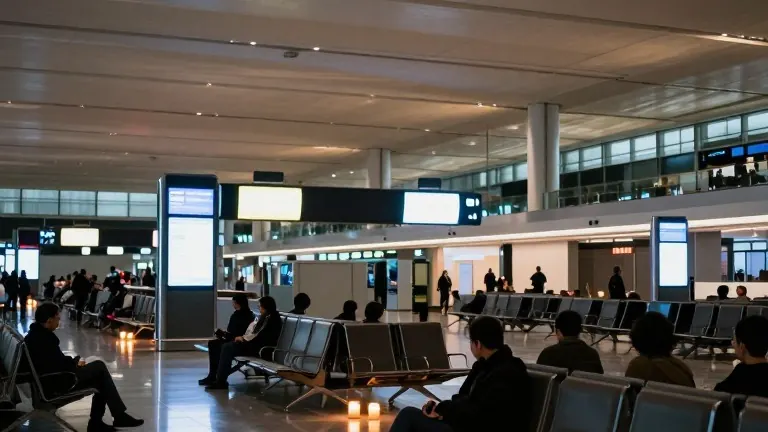
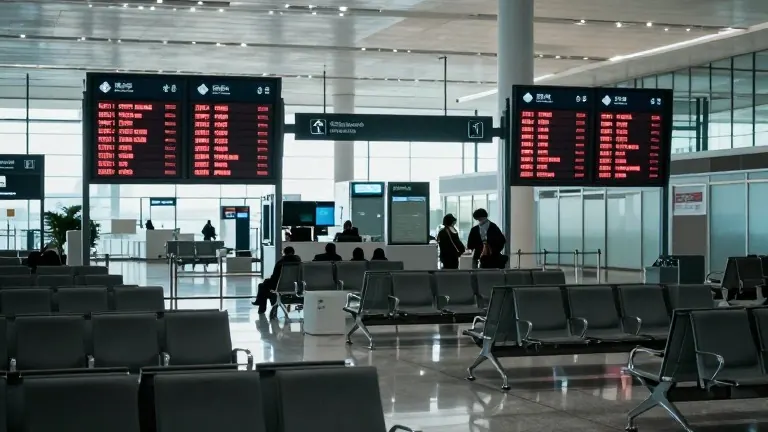
The Federal Aviation Administration lifted the nationwide ground stop at 8:38 p.m. ET on Friday, allowing departures to resume after a communications failure halted air travel across the United States. The FAA stated that its systems were thoroughly tested for stability and reliability before the order was revoked. Passengers are advised to contact their airlines for specific flight updates as operations begin to restart.
Transportation Secretary Sean Duffy explained at a White House briefing that the outage resulted from aging Air Traffic Control technology becoming overloaded with data. He clarified that a cyberattack was not the cause of the instability in communications. Duffy described the situation as an emergency and called on Congress to provide emergency funding for upgrades to the system.
The financial scale of the needed repair is substantial. Duffy estimated that the system requires approximately $50 billion for a complete overhaul. This figure includes the $12.5 billion Congress approved last year for the project. The White House is currently lobbying for an additional $30 billion to finish replacing old copper wires with fiber optic lines and updating radio systems at airports nationwide.
Recovery of normal air traffic will not happen immediately. At the time the ground stop began, 3,500 airplanes were in the sky. By the time of the briefing, fewer than 400 remained in the airspace. Duffy said the return to normal operations would be slow as air traffic controllers manage the backlog of flights.
Airlines have adjusted their schedules in response to the disruption. JetBlue canceled all remaining domestic flights for Friday evening, with the exception of Europe-bound departures from Boston Logan International Airport and New York's John F. Kennedy International Airport. The carrier warned that disruptions and additional cancellations are expected to continue into Saturday. Air Canada canceled all flights to and from the United States for the remainder of Friday evening, noting that routes through U.S. airspace could also be affected.
Delta Airlines announced a travel waiver allowing customers to change flights at no extra cost. American Airlines stated that some flights from certain airports began receiving clearance to depart. United Airlines confirmed that flights already airborne would continue, while new domestic flights would not depart while the ground stop was in effect.
Local officials and airport authorities provided updates to travelers. Long Island MacArthur Airport noted that terminal operations were normal but warned that the longer the outage continues, the greater the potential for delays and cancellations over the next few days. The airport encouraged passengers to check directly with airlines before arriving at the terminal. New York City Emergency Management described the event as a temporary telecommunications outage.
Political leaders in New York responded to the halt. Governor Kathy Hochul said she had spoken with Port Authority Executive Director Kathryn Garcia and was working to get answers from federal officials. Senator Kirsten Gillibrand stated that her staff had asked the U.S. Department of Transportation for answers regarding the disruption affecting New Yorkers.
Aviation safety expert Steve Arroyo, a former United Airlines pilot, compared the event to a regional communication outage in September that affected hundreds of flights in the Northeast. He noted that this incident occurred on a nationwide scale. Arroyo explained that when controllers cannot communicate with planes, they must stop airplanes on the ground to avoid risking communication loss in the air. He added that unlike the ground stop after the September 11 attacks, pilots likely maintained communication with ground controllers at airports during this event.
DHS Secretary Markwayne Mullin told the public that there was no indication the outage was a nefarious attack. He confirmed that all flights in the air were accounted for and that the public had no reason to be afraid. The FAA had initially grounded all flights due to extraordinary circumstances and safety reasons, citing a communications issue affecting the 22 regional air traffic control centers that direct planes en route between airports.