Judge Boasberg orders Trump administration to list all states facing DOJ election pressure
The federal judge ruled Thursday that the government must identify every state receiving letters warning of criminal prosecution, with a final decision on the Democratic lawsuit due Monday.
By Omar Khalil ·
A federal judge in Washington, D.C., ordered the Trump administration to identify every state where the Department of Justice has pressured local officials to prevent noncitizens from voting in next week's midterm elections. The ruling came as Democratic leaders challenged the federal government's actions as an overreach of its authority. Judge James Boasberg set a deadline for the government to provide this list by Friday. He also scheduled a decision on the case for Monday, one day before Election Day.
The lawsuit, filed last week, names President Donald Trump, the Department of Justice, Attorney General Todd Blanche, the Department of Homeland Security, and Secretary Markwayne Mullin. The plaintiffs include Senate Minority Leader Chuck Schumer, House Minority Leader Hakeem Jeffries, the Democratic Senatorial Campaign Committee, the Democratic Congressional Campaign Committee, and the Association of Democratic Governors. They seek a court order stopping the federal government from removing legally registered voters from state rolls or blocking states from issuing and counting ballots.
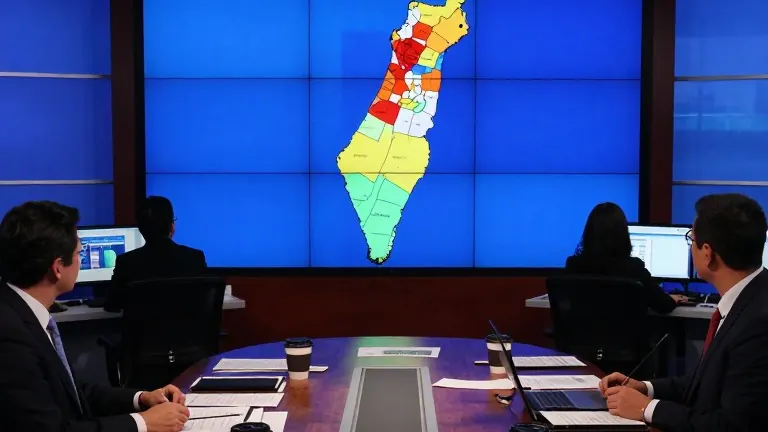
The dispute centers on letters from the Justice Department sent to state election officials. These letters threaten criminal proceedings if states deliberately keep noncitizen foreigners on their voter rolls. Boasberg wants to know if California and Washington are the only states to receive such correspondence. In California, the Justice Department sued to stop officials from counting mail-in ballots from people identified as probable noncitizens until their status is confirmed. A federal judge ruled in California's favor on Wednesday, and the department immediately appealed that decision.
Government lawyers argue that federal authorities have evidence of illegal voting by noncitizens in the upcoming midterms. However, data from state records and Justice Department investigations indicate that noncitizen voting is extremely rare. The administration claims the plaintiffs' claims are too ambiguous and would hinder its constitutional duty to enforce federal laws. During the hearing, Boasberg expressed doubt that the plaintiffs proved the legal basis for their accusations. He noted that the letters do not force states to act unless a court order compels them.
Christian Dibblee, an attorney for the Justice Department, stated that the decision lies with the states. He explained that the letters merely notify officials of a potential violation of federal law. Uzoma Nkwonta, the lawyer for the plaintiffs, asked the judge to end what he called an unprecedented campaign by the government to interfere with state election administration. Nkwonta emphasized the need to protect the states' ability to manage their own elections.
Boasberg acknowledged that the government has legitimate concerns. He stated that the most difficult question for him is the plaintiffs' standing to bring the case. He was nominated to the bench by President Barack Obama. The White House has criticized Boasberg for rulings against the federal government. Last year, Trump and his allies sought to remove Boasberg after he blocked the use of the Alien Enemies Act to deport Venezuelan migrants to El Salvador by air.
The government can render the process moot at any time by filing a document stating it will not engage in the challenged behavior. Boasberg pointed this out during the hearing. The parties will await the judge's final ruling on whether to block the federal actions before the polls open next week. The outcome will determine the extent of federal oversight in state election processes this cycle.