Oracle Will Sell Google Chips, Targeting $9.4 Billion in Revenue
The partnership marks the first time TPUs leave Google's infrastructure, a move that analysts say could challenge Nvidia's dominance while complicating Google's own cost structure.
By Madison Cooper ·
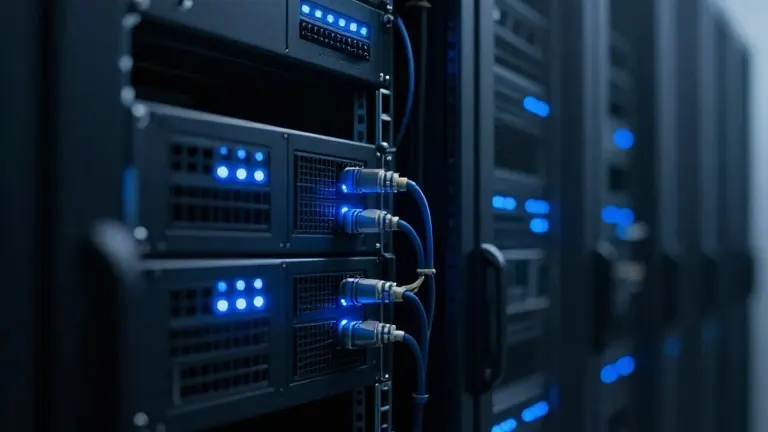
TD Cowen models $9.4 billion in sales for Google's tensor processing units in the second half of this year. The projection rests on a new distribution deal announced Tuesday, one day before Alphabet releases its third-quarter earnings. Under the agreement, Oracle will sell Google's custom AI chips directly to customers. This marks the first time TPUs have been available outside of Google's own cloud infrastructure.
Thomas Kurian, who leads Google's cloud division, has spent more than 20 years at Oracle before joining Google in late 2018. The arrangement reflects a shift in strategy for a company that previously insisted customers purchase its chips, models, and cloud services as a single package. By partnering with a rival, Kurian is attempting to expand the addressable market for hardware that has historically remained exclusive to Google's servers.
Analysts view the move as a direct challenge to Nvidia, which has dominated the AI chip market. Chris Ballard, a managing director at Check Capital Management, stated that Google is a strong competitor and could eventually take market share from Nvidia. Ballard's firm held approximately $236 million in Alphabet stock as of June 30. Uday Cheruvu, a portfolio manager at Harding Loevner, noted that Google's mindset has changed from doing its own thing to actively serving external customers.
The financial context for the decision is strong. Analysts expect Google Cloud revenue to increase by about 90% from a year earlier, following an 82% growth rate in the second quarter. While Google's second-quarter cloud revenue of $25 billion trailed Amazon Web Services at $42 billion and Microsoft Azure at $29 billion, Google is growing at the fastest pace among the major providers.
Caveats exist regarding profitability. TD Cowen estimates an operating margin of 20% on TPU sales, a figure lower than the roughly 35% overall cloud margin reported last quarter. Cheruvu believes Google's cloud operating margin is unlikely to widen much beyond the mid-30s. Additionally, Google CFO Anat Ashkenazi told investors in July that only a small portion of TPU revenue from existing agreements will be recognized this year, with the vast majority arriving in 2027.
Google already opened TPUs to outside data centers in the second quarter. The company also plans to use more outside capacity in the third quarter while it builds its own infrastructure. Kurian told a Goldman Sachs conference in September that servers running Google's own silicon reach payback in roughly half the time of standard AI servers, a benefit he attributed to optimizing the entire technology stack.
Major tech firms are already buying the hardware. Anthropic agreed last October to use up to 1 million TPUs in a deal worth tens of billions of dollars. CNBC confirmed that OpenAI is also planning to purchase Google TPUs. Anthropic disclosed in its IPO filing on Monday that it uses silicon from Google, Amazon, Nvidia, and Advanced Micro Devices, allowing it to select chips based on price-performance characteristics for specific workloads.
Financing for these massive purchases is becoming complex. This week, Broadcom detailed a $63 billion vehicle backed by Blackstone and three major banks. The fund will buy TPUs and networking gear from Broadcom to lease to Anthropic for five years. William Blair analysts noted that this financing plan covers about half of Anthropic's 2027 needs, suggesting additional funding structures are required to meet the company's full capacity targets.
More Business · Scam Watch · Report a business · Got a Story?