Riyadh Air Traffic Collapses as Houthi Strikes Force Massive Cancellations
Nearly 90% of scheduled flights were scrapped at King Khalid International Airport between October 8 and October 25, according to new aviation data.
By Sophia Bennett ·

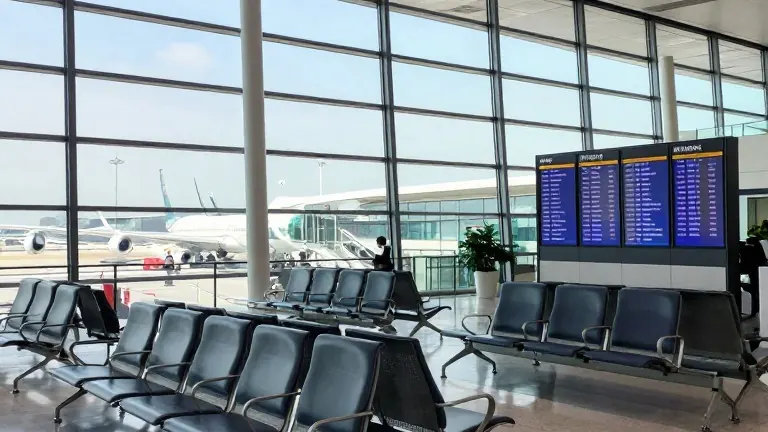
The Saudi capital’s main airport has operated with nearly empty skies for three weeks, a disruption that has grounded the vast majority of commercial air traffic in the region. Aviation analytics firm Cirium released data on Monday showing that the scale of the interruption is among the largest recorded in recent years.
Between October 8 and October 25, 4,071 of the 4,736 scheduled flights at King Khalid International Airport were canceled. That figure represents an 86% reduction in capacity at the kingdom’s second-busiest hub, located in Riyadh. The data covers the period following a series of missile and drone attacks by Yemen’s Iran-aligned Houthis.
The Houthis have targeted airports, ports, and oil facilities in Saudi Arabia using ballistic missiles and drones. An attack on October 10 resulted in 13 deaths, marking the deadliest incident in the kingdom in over a decade. Saudi authorities halted operations that day and partially reopened the airport on Sunday. Domestic flights resumed from Terminal 1, while national carriers were allowed to run international services from Terminal 2.
The partial reopening was short-lived. On Monday, the Houthis announced they had struck the airport again, labeling it a military target. In response, international airlines have suspended services to Riyadh through November. Delta Air Lines has also delayed the launch of its new Riyadh route until next year.
The disruption has extended beyond the capital. Cirium data indicates that more than 7,800 flights, or 45% of all scheduled departures from Saudi airports, were canceled during the same two-week period. Cancellations peaked on October 12, when more than 60% of scheduled flights nationwide were scrapped. Dammam saw a 42% cancellation rate, while Abha, which the Houthis have claimed as a target, recorded a 46.7% drop in services.
Smaller regional airports have suffered severe losses as well. At Najran, situated near the Yemeni border, every scheduled flight was canceled. The travel chaos has also affected the local economy, leading to the cancellation or postponement of several major events, including the kingdom’s primary investment conference.
Source: The Jerusalem Post