Shenzhen Summit Yields Little Substance
Trump, Xi, and Putin met in China, producing a brief statement on nuclear war while avoiding specific details on Ukraine and the Middle East.
By Madison Cooper ·
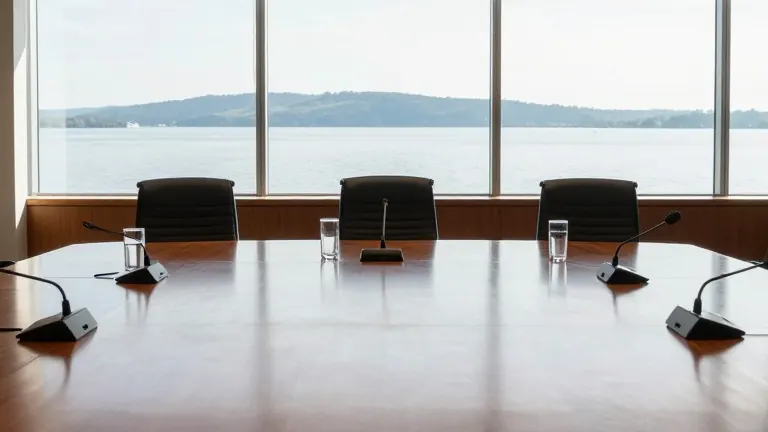
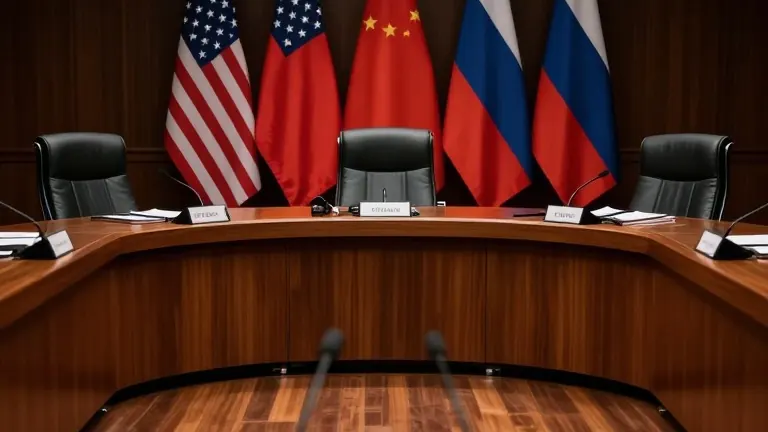
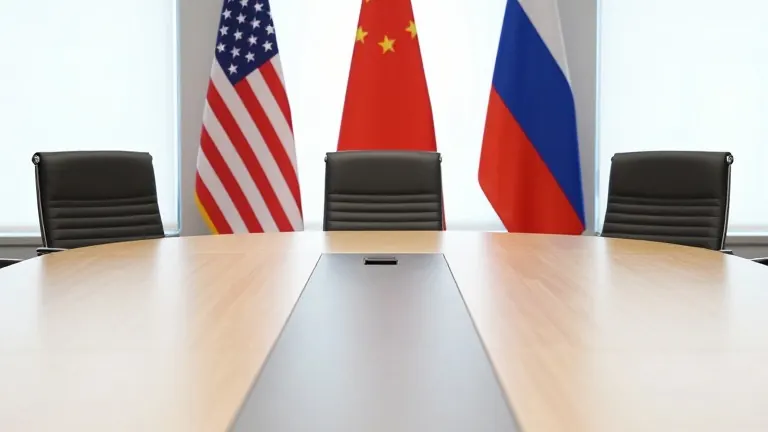
U.S. President Donald Trump joined Chinese President Xi Jinping and Russian President Vladimir Putin in Shenzhen, China, for the first tripartite summit involving the current leaders of the world's major powers. The gathering took place on Thursday at a lakeside villa and lasted approximately ninety minutes. The event was intended to project a unified front among the three nations, though the final output was a concise communiqué rather than a comprehensive treaty.
The joint statement issued by the three leaders consisted of 223 words. Its primary assertion was that nuclear war could not be won and should never be fought. The document, described as a declaration toward peace, did not explicitly reference the ongoing conflict in Ukraine or the war in the Middle East. Observers noted that the text hinted at potential sanctions relief for Russian energy exports, but it did not formally promise such measures. No specific economic deals or military arrangements were detailed in the release.
The interactions among the three leaders drew immediate attention. Trump displayed visible enthusiasm when addressing Putin, describing him as a friend during a separate bilateral meeting. In contrast, Xi Jinping maintained a more formal distance, seating Putin at a different table during the summit dinner and sending a deputy to greet the Russian leader at the airport while personally receiving Trump on the tarmac. William Burns, the former C.I.A. director and U.S. Ambassador to Russia, described the encounter as a meeting of two autocrats and a third leader with autocrat envy. He stated that there did not seem to be much substance accomplished during the session.
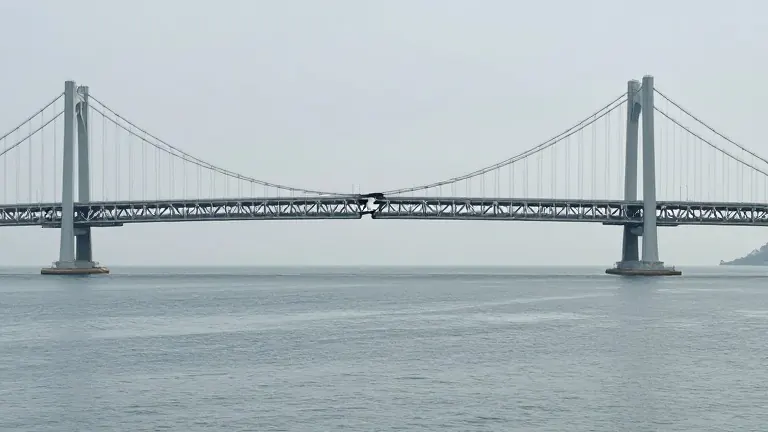
The summit occurred against a backdrop of active military conflicts. Volodymyr Zelensky, the President of Ukraine, criticized the meeting the day before it began. He told NBC’s Richard Engel that large countries often make the mistake of deciding the future of smaller nations without their consent. Following the summit, Politico reported that Trump called European leaders from Air Force One. He urged them to reduce spending on Ukraine assistance, citing Putin's interest in peace talks. This position appeared to conflict with recent statements from Putin, who said he was not interested in ceasefire negotiations due to Ukrainian attacks on the Kerch Strait Bridge.
The Shenzhen gathering invited comparisons to the 1945 Yalta Conference, where Winston Churchill, Franklin D. Roosevelt, and Joseph Stalin discussed postwar spheres of influence. Putin explicitly embraced this parallel during a press conference. He asked what was so bad about Yalta, arguing that it merely codified existing realities. He suggested that modern conflicts would similarly require coming to terms with the realities on the ground. Alexander Vershbow, a former U.S. Ambassador to Russia, disagreed with the comparison. He called the Shenzhen meeting another step in the dismantlement of the post-Cold War system, expressing sadness over the missed opportunity for Russia to integrate with the West.
The meeting concluded without a formal agreement between the three powers. Trump’s administration had hoped to leverage the summit to reshape diplomatic dynamics in Europe and the Middle East. Instead, the outcome remained a general acknowledgment of the dangers of nuclear conflict. The absence of specific provisions regarding Ukraine or the Middle East left key geopolitical questions unresolved. The leaders departed Shenzhen with a shared statement that emphasized the need to avoid nuclear catastrophe, leaving the detailed mechanics of their respective conflicts for future discussion.