Israel Vote Stalemate Forces Arab Parties Into Key Role
With 17 seats unallocated, neither Netanyahu nor Eisenkot can form a government without crossing party lines.
By Madison Cooper ·
The Knesset is stuck.
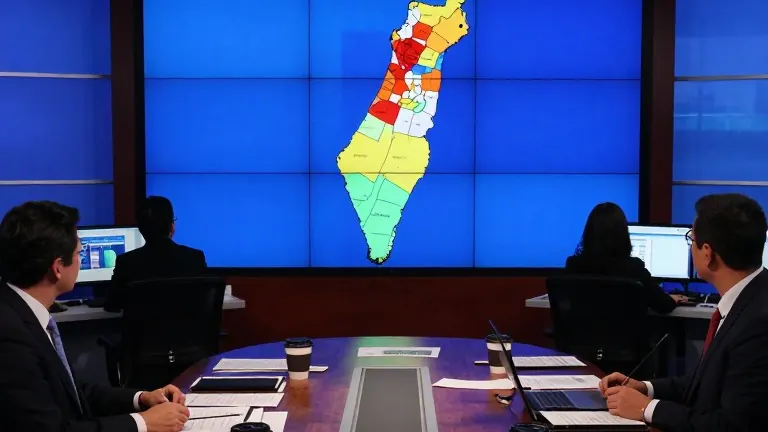
Israel’s election delivered no majority. By Wednesday afternoon, with nearly 80 percent of votes tallied, neither Prime Minister Benjamin Netanyahu’s governing bloc nor the opposition led by Gadi Eisenkot reached the 61 seats required to govern. Both sides appeared reluctant to partner with Arab parties that hold the deciding balance of power.
Tuesday’s vote saw 77.7 percent of eligible citizens cast ballots, the highest turnout since 1999. Netanyahu’s Likud-centered coalition secured 54 seats. Eisenkot’s opposition alliance, which spans the left-wing Democrats to Avigdor Lieberman’s right-wing Yisrael Beiteinu, won 49.
The gap leaves 17 seats in the hands of the Arab-dominated Ra’am and Joint List. Together, they hold enough power to appoint a speaker, pass laws, and form a government for either side. The final count is due Friday, with official results published on November 4.
President Isaac Herzog will now consult with party leaders. He will task the candidate he deems most likely to succeed with forming a cabinet. That candidate has 28 days, extendable by 14, to build a coalition. Failure could trigger new elections, leaving the current cabinet to serve as caretakers.
Turnout among Palestinian citizens of Israel reached roughly 80 percent, according to some estimates. Analysts link this surge to the treatment of the minority under the Likud-led government since the October 7, 2023, attack. Roi Zur, a lecturer at Essex University, noted that two well-organized lists improved mobilization, particularly for Ra’am.
Campaigns from both major blocs faced criticism for racist undertones. Likud claimed the opposition planned to rely on Arab parties and petitioned to block the Joint List. Lieberman ruled out coalitions with Arab or ultra-Orthodox groups. Naftali Bennett, who previously governed with Ra’am, said there was no mandate to partner with Arab parties after October 7.
Daniel Levy, a former government adviser, outlined four possible paths forward. These include new elections, Likud drawing defectors from the right, a Netanyahu-led unity government, or an Eisenkot-led minority government with Arab support. Levy considered the last option unlikely but said the Arab parties’ demands would not be excessive.
Mairav Zonszein of the Crisis Group stated that Eisenkot would face difficulty working with Netanyahu’s camp due to demands for a state commission of inquiry and universal draft. Bennett has shifted positions before, while Lieberman remains a hard-right figure despite his rivalry with Netanyahu.
Some analysts, including Levy, suggested the government might seek military escalation, potentially against Iran, to justify an emergency cabinet. Daniel Bar Tal, a political psychologist at Tel Aviv University, described a challenging moment where many Israelis want change but resist cooperating with Arab parties.
More Politics · World news · Report a business · Got a Story?