Florida Senate Special Election: Moody Retains Seat Amid National Democratic Surge
Ashley B. Moody held the Republican seat in Florida's U.S. Senate special election, defying a historic national wave that shifted both chambers of Congress to Democratic control.
By Omar Khalil ·
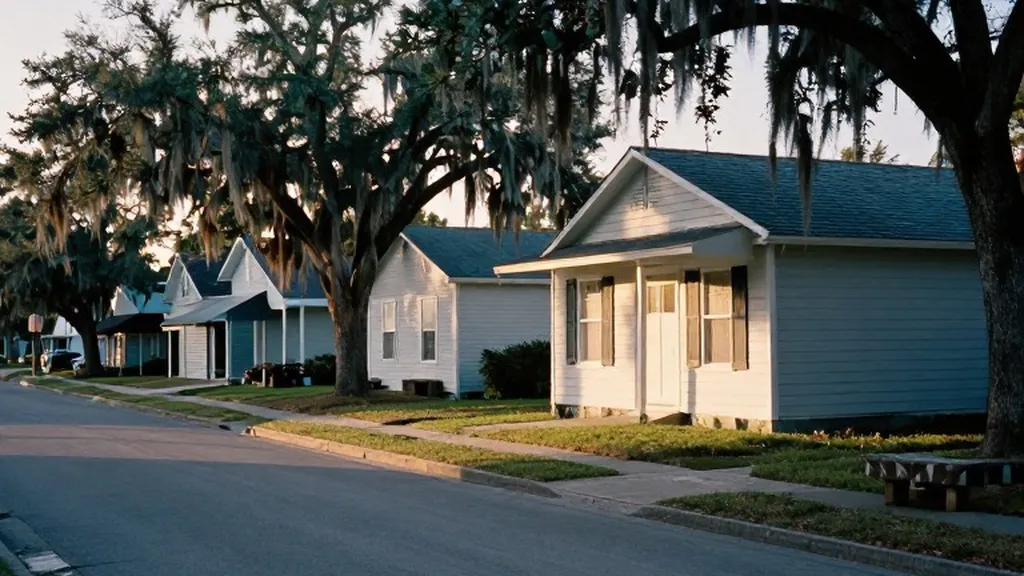
Pensacola voters cast their ballots on Tuesday, November 3, 2026, in an election defined by a historic shift in power at the national level. While the local community focused on state and federal races, the outcome in Washington established a new direction for the country. Florida, a key swing state, saw its political landscape tested by a nationwide trend that favored Democratic candidates across the map. The state’s unique ballot structure included a special election for the U.S. Senate, a regular gubernatorial race, and contests for every U.S. House seat. These elections took place from 7 a.m. To 7 p.m., as Florida spans both Eastern and Central time zones.
No regular U.S. Senate election was held in Florida this year. Instead, voters decided a special election to fill the remainder of a six-year term originally won by Marco Rubio in 2022. Republican incumbent Ashley B. Moody faced a Democratic challenger in this contest. The result was a significant hold for the GOP in a state that often serves as a bellwether for national sentiment. Republicans retained control of the seat in Florida, a fact highlighted in the latest election tallies from Ballotpedia. This outcome stands in contrast to the results in Ohio, where Democrats gained control of a similar special Senate seat.
Locally, the election included a contested race for the governorship. The seat was open, with no incumbent running for re-election. Candidates from the Democratic, Libertarian, No Party Affiliation, and Republican parties appeared on the ballot. This race was one of several statewide contests that shaped the future of Florida’s executive branch. Voters in Pensacola, Tallahassee, and Gainesville participated in these statewide races alongside local municipal and school board elections that vary by county. The diversity of offices on the ballot reflected the comprehensive nature of midterm elections, where citizens decide a wide array of leadership roles.
Beyond the executive and legislative branches, Florida voters considered three statewide ballot measures. Amendment 1 proposed increasing the amount of funds that may be retained in the budget stabilization fund from 10% to 25% of net general revenue. Amendment 2 sought to exempt agricultural-related tangible personal property, such as farm equipment or tools, from property taxes. Amendment 3 addressed local government and property taxes, proposing to increase the homestead tax exemption and decrease the cap on how much the assessed value of non-homestead properties can increase. These measures aimed to address economic concerns that resonated with voters across the state.
Nationally, the election results signaled a dramatic rebalancing of power in the United States. Democrats achieved a sweeping victory, taking control of both the U.S. House of Representatives and the U.S. Senate. According to the Associated Press, Democrats won 20 of the 35 U.S. Senate races, while Republicans won 13, with two races remaining uncalled as of early Wednesday morning. This net gain of seven seats for the Democrats was the largest shift in partisan control since 2010, according to Katie Owens Hubler, director of elections and redistricting at the National Conference of State Legislatures. The party had previously lost nearly 1,000 state legislative seats during President Barack Obama’s tenure, a trend they have worked to reverse over several cycles.
In the U.S. House of Representatives, the Democratic wave was equally pronounced. Democrats won 233 of the 435 seats, compared to 138 for Republicans, with 64 seats still uncalled. This resulted in a net gain of 30 seats for the Democrats, securing a solid majority in the lower chamber. The Associated Press reported that this victory was part of a series of sweeping gains nationwide that shifted the balance of power across several battleground and Republican-leaning states. The results set up a divided government, with Congress poised to reassert itself as a coequal branch ready to challenge President Donald Trump and reverse course after two years of unified Republican control.
The national victory included historic firsts in several states. In South Carolina and Kansas, Democrats won Senate seats for the first time since 1932. In Texas, Democrats secured a historic win for governor, electing Gina Hinojosa, the state’s first Democratic governor since Ann Richards. The Associated Press noted that Democrats took full control of both statehouse chambers and governors' offices in at least five states where they previously shared power. This includes Michigan, Minnesota, and Pennsylvania, where Democrats retained full control of the state government. The wins put pressure on the party to answer to an electorate angry over the rising cost of living, high gas prices, and inflation.
President Donald Trump spent the day after the election defending his administration’s priorities rather than addressing the electoral defeat directly. He held a media event to preview the construction of a White House ballroom, speaking for nearly 20 minutes about the project. Trump suggested that his party’s losses were due to the specific candidates on the ballot rather than his leadership. The AP Voter Poll indicated that about two-thirds of voters said Trump does not have the right priorities, a sentiment that may have contributed to the Democratic surge. The president also threatened to use the power of the presidential veto to strike down the new Democratic agenda, warning of potential gridlock in the coming years.
House Democratic Leader Hakeem Jeffries of New York pledged to deliver on the mandate for change, promising a 100-day agenda focused on lowering the costs of gas, groceries, and other goods. The new leadership signaled a robust oversight agenda to hold the executive branch accountable. The results of the 2026 midterm elections will be fully implemented as the new Congress convenes on January 3, 2027. For now, the political landscape has been fundamentally reshaped, with Democrats holding the keys to the legislative process and facing the challenge of governing in a divided nation.