Florida voters decide control of Congress and state leadership
Polls in Pensacola and Tallahassee are open until 7 p.m. As the outcome determines the agenda for investigations and the 2028 cycle.
By Sophia Bennett ·
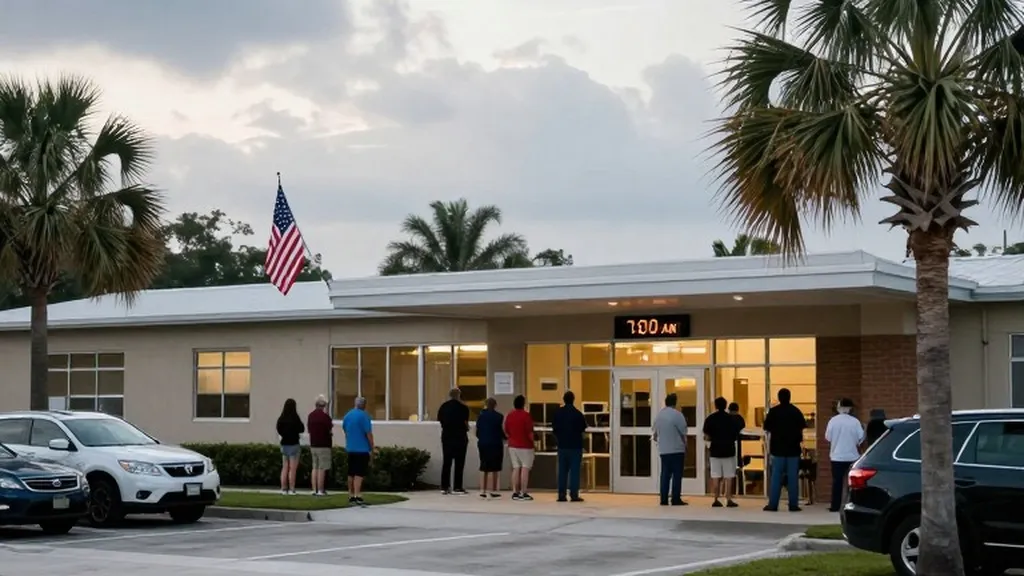
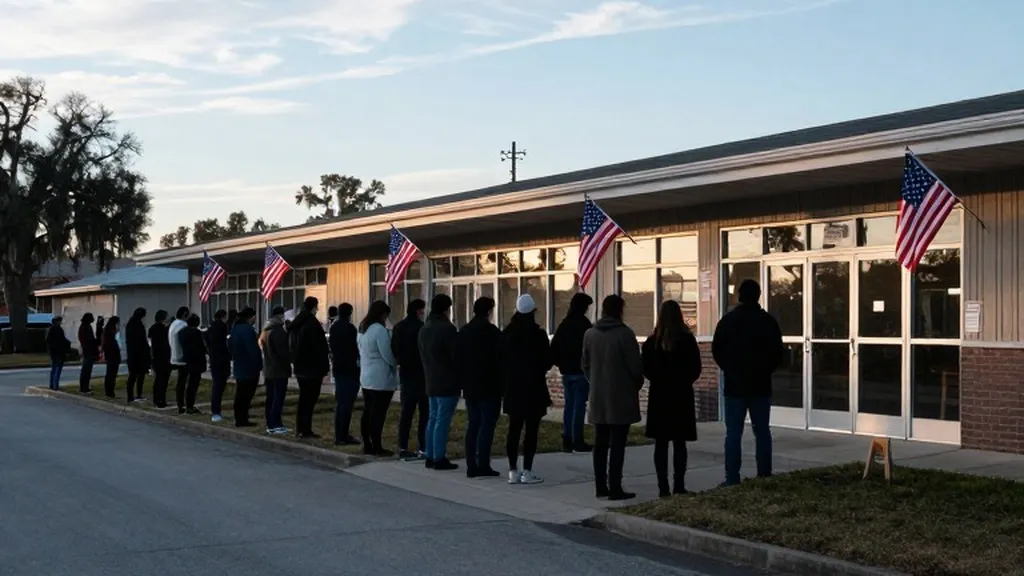
Voters in Pensacola, Tallahassee, and Gainesville are casting ballots on a Tuesday that will define the final two years of President Donald Trump's second term. According to Ballotpedia, Florida polls are open from 7 a.m. To 7 p.m., with the state divided between the Eastern and Central time zones. Residents are choosing between the Democratic, Republican, Libertarian, and No Party Affiliation parties for the open governorship. Every U.S. House seat in the state is also on the ballot, alongside state and local offices and ballot measures that vary by county. The Associated Press describes the day as a referendum on the president's performance, with many voters expressing frustration over high prices and an unpopular war with Iran.
In the state's capital, Tallahassee, the focus is on the open governor's race. There is no incumbent on the ballot for this office. Meanwhile, in Pensacola and other coastal areas, voters are weighing the national implications of their choices. The Associated Press reports that more than 57 million people had already voted as of Monday, surpassing the early vote of four years ago in many closely watched states. This high level of early participation suggests that turnout will be a decisive factor in the final tally. The Associated Press notes that Republicans are bracing to lose the House while fighting to hold the Senate, with one or two seats potentially tipping either chamber.
The control of the U.S. House is at stake with all 435 seats up for election. Republicans currently hold 218 seats and Democrats hold 214. Democrats need a net gain of three districts to achieve a majority, while Republicans can afford to lose no more than two. Sixty House incumbents, including 23 Democrats and 37 Republicans, did not run again. Ballotpedia identifies 46 battleground districts, with 25 held by Democrats and 21 by Republicans. The outcome in these districts will determine whether the party in the minority can launch investigations or if the majority can pass legislation with fewer hurdles.
The U.S. Senate race is equally critical, with 35 seats on the ballot. Republicans hold 53 seats and Democrats hold 45, plus two independents who caucus with Democrats. Democrats need a net gain of four seats to take the chamber. Eleven senators are not running again, including four Democrats and seven Republicans. Winners in these races will begin their six-year terms on January 3, 2027. The Associated Press highlights several key matchups, including a contest in North Carolina between former Governor Roy Cooper and former Republican National Committee chair Michael Whatley. In Georgia, Senator Jon Ossoff faces Republican Representative Mike Collins.
If Democrats gain control of either chamber, the political landscape for oversight and investigations will shift significantly. House Democratic Leader Hakeem Jeffries has outlined a 100-day agenda focused on the cost of living and oversight measures. The Associated Press notes that if Democrats win even one chamber, investigations and possible impeachment proceedings become likely. This potential shift in power is influencing how candidates campaign and how parties allocate resources. The Associated Press analysis of AdImpact data shows that 88.1% of Republican general election TV ad spending went to states and districts that Trump won in 2024. This strategy reflects the party's focus on defending its base in areas where the president has strong support.
The mood among voters is mixed, with the Associated Press noting that 35% of U.S. Adults approve of Trump's job performance. Only 25% approve of his handling of the economy, and about seven in 10 say the country is heading in the wrong direction. Most respondents blame the president for high prices. In Raleigh, North Carolina, voter James Moore, a 57-year-old librarian, said that he is paying more for taxes, healthcare, and everything else. In Palm Beach Gardens, Florida, voter Mark Barker said he has been following Trump the whole time and thinks he is doing an awesome job. These contrasting views highlight the deep divisions that are driving voter turnout.
The 2026 elections are likely to be the most expensive in history. Republican committees have outraised and outspent Democratic committees, aided by Trump-affiliated groups and Elon Musk. However, at the candidate level, Democrats have outraised their opponents. This financial disparity is playing out in the advertising strategies of both parties. The Associated Press reports that Trump held dozens of rallies, ending Sunday in Salina, Kansas, where he told the crowd to pretend he was on the ballot. Many Republican candidates have kept their distance from the president, reflecting a cautious approach to the midterm pattern where a president's party almost always loses seats.
The administration's actions regarding election administration have also drawn attention. A federal judge temporarily barred the Trump administration from carrying out a plan to prevent noncitizen voting on Monday. Critics argue that the move risks disenfranchising eligible voters and infringes on states' authority over elections. The Associated Press notes that the administration has filed lawsuits in Alaska and California related to the certification of results. The Justice Department has threatened to prosecute local election officials, leading some Democrats to fear interference and intimidation. The U.S. Postal Service has added hours, staff, and special lines to ensure that mail ballots are counted on time.
In Florida, the state's new congressional maps are a factor in the House races. The state is one of six that are using new maps after mid-decade redistricting, along with California, Missouri, North Carolina, Tennessee, and Texas. The Associated Press notes that new districts in Florida and elsewhere may not vote as drawn. This uncertainty is adding to the complexity of the election. In the governor's race, the open seat is part of a nationwide contest for the 36 governorships on the ballot. Republicans hold 26 governor's offices and Democrats hold 24. Democrats would need a net gain of two governorships to achieve a nationwide majority, which Republicans have held since 2010.