Democrats Declare 'Libbing Out' Era After Securing Largest Majority in Half a Century
Party leaders gathered in Washington to outline an aggressive agenda that includes budget cuts, Supreme Court reform, and a full reckoning with the Trump administration.
By Omar Khalil ·
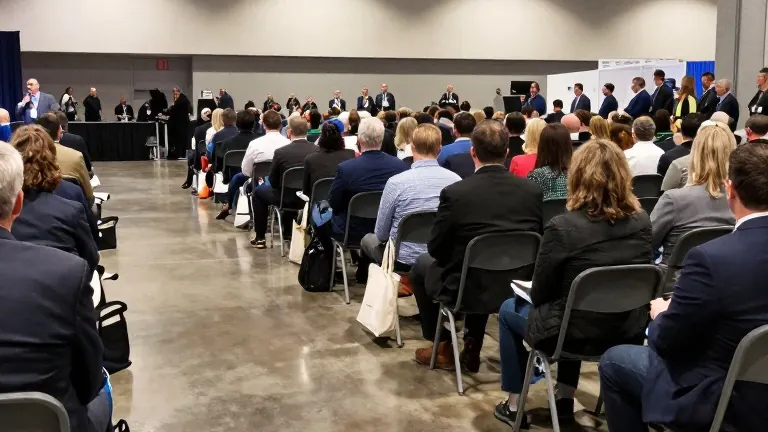
Democrats claim their largest congressional majority in 50 years, a result that party leaders say grants them explicit permission to pursue ambitious legislative and oversight goals. The shift in power was the central theme at Crooked Con, a three-day convention held in Washington, D.C., that ran from Thursday to Saturday. Attendees used the event to celebrate Tuesday’s election results and map out a strategy for a party that now controls both chambers of Congress.
North Carolina Democratic Party Chair Anderson Clayton, the country’s youngest party chair, described the mood at the convention as a moment of pure celebration. She told reporters, “I am absolutely libbing out right now.” Clayton argued that voters have given the party a mandate to dream big, a sentiment echoed by other leaders who rejected the idea that the election was merely a victory lap. They framed the win as a functional tool for governing rather than a final destination.
The new leadership is already prioritizing aggressive oversight of the executive branch. Rep. Yassamin Ansari, a member of the House Oversight Committee, stated that investigating corruption in the Trump family is one of four main focuses for her committee. Rep. Jason Crow of Colorado added that the impeachment of Defense Secretary Pete Hegseth is on the table. Crow noted that officials who have engaged in pay-to-play relationships with the president, such as donating to the Gilded Ballroom, are now subject to scrutiny because the political dynamic has changed.
Michigan Sen. Elissa Slotkin extended that logic further, suggesting that accountability must reach beyond Cabinet-level officials. She argued that anyone who abuses taxpayer dollars or violates the law on behalf of the president must be held responsible. Slotkin summarized the sentiment of the room with a single word: “shellacked.” She warned her colleagues against interpreting the election results as proof that the public loves the Democratic Party, urging them to avoid that specific mistake.
A long list of policy priorities emerged from the weekend’s discussions. The party’s wish list includes slashing the Pentagon’s budget, reengaging diplomatic ties with Canada, and winding down the war in Iran. Leaders also proposed curbing the impact of Immigration and Customs Enforcement, reforming the Supreme Court, and withdrawing funds from foreign wars. Additional goals include prioritizing climate change, eliminating the Electoral College, and placing major restrictions on artificial intelligence companies, data centers, and billionaire tech founders.
Pennsylvania Gov. Josh Shapiro, a contender for the 2028 presidential nomination, emphasized the need for big swings rather than incremental change. He said the party should focus on building something new for the future rather than rebuilding the past. Shapiro, representing what he called the swingiest state in America, said he intends to be part of the conversation about the party’s direction. He avoided giving specific answers about his own White House intentions when pressed by reporters.
Maryland Gov. Wes Moore agreed that the momentum from Tuesday must be converted into action. He said he is ecstatic because the party now has an opportunity to do something tangible. Moore criticized those who view the election as a celebratory moment, arguing that the true value of the win lies in the work that follows. The focus is on using the new power to implement the detailed agenda that has been outlined by the incoming majority.
The question of Senate leadership remains open, but there is a consensus that current leader Chuck Schumer should not retain his position. Sen. Chris Van Hollen of Maryland, who is backed by some progressives, said there should be no coronation for the next congressional leader. Van Hollen may be looking at a higher office, while Slotkin said she is not ruling out a run for the leadership role. The party is moving forward with a clear intent to use its new numerical advantage to drive its preferred policy outcomes.