Florida's open governor's seat anchors 18-18 national split
Pensacola voters chose between four parties in an open race as Democrats secured a majority of governorships nationwide.
By Sophia Bennett ·
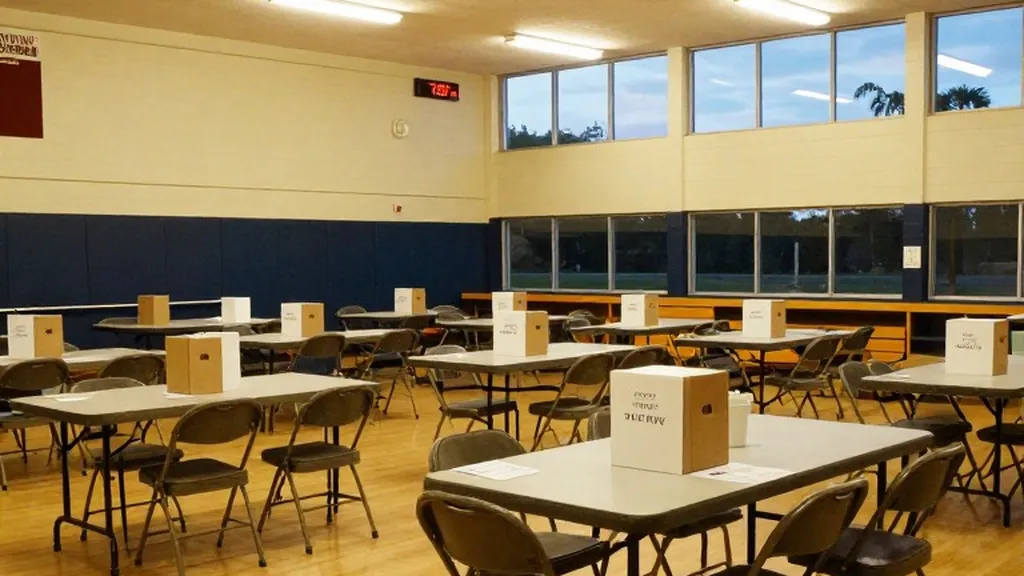
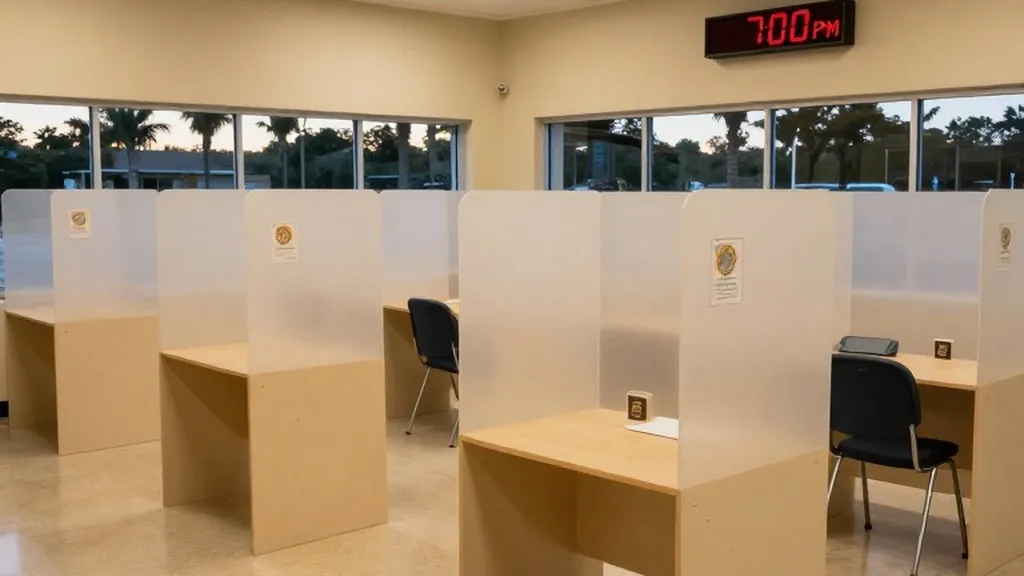
Pensacola residents cast their votes in the general election on Tuesday, November 3, 2026, with polling places open from 7 a.m. to 7 p.m. The state is divided between the Eastern and Central time zones, a logistical detail that influenced the closing times for voters in different parts of the peninsula. In Escambia County, which includes the city of Pensacola, the race for governor was an open seat with no incumbent running for re-election. The ballot featured candidates from the Democratic, Libertarian, No Party Affiliation, and Republican parties. This local contest was part of a broader national trend where state executive offices were heavily contested.
Across the state, every U.S. House seat was on the ballot, alongside state and local offices. Voters in Tallahassee and Gainesville also participated in elections for the State Senate and State House. The Florida Supreme Court and intermediate appellate courts also had seats up for grabs, reflecting the comprehensive nature of the midterms. Local ballot measures varied by county, allowing communities to decide on specific policy issues. The diversity of offices on the ballot meant that a single trip to the polling place could determine control of federal, state, and local government branches.
The national picture revealed a significant shift in state power. Democrats won a majority of governorships for the first time since before the 2010 elections. This achievement was part of a broader sweep that included winning a plurality of state government trifectas and state legislative chambers. The results marked a dramatic reversal from recent cycles, highlighting the volatility of midterm elections. The 36 governor races across the country produced a 18 to 18 split in party control by the end of the night, indicating a closely divided landscape in statehouses.
Nine of these governor races were considered battlegrounds, where the outcome was uncertain until the final tallies were announced. These contests required careful counting and often extended into the early morning hours. The uncertainty in these states added tension to the national narrative, as analysts tracked the shifting lead in each district. The open nature of many of these races, including Florida's, meant that voters were not choosing between an incumbent and a challenger but rather evaluating new faces without the bias of name recognition.
Nineteen of the 36 governor seats were open, with no incumbent seeking re-election. This high number of open seats allowed for a fresh slate of candidates and new policy platforms. In Florida, the absence of an incumbent meant that the race was defined by the candidates' visions for the state rather than a referendum on a sitting governor's record. The open seat status also allowed for a wider field of candidates from various parties, as seen in the four-party ballot in Florida. This dynamic contributed to the competitive nature of the race in Pensacola and other key urban areas.
The split in governor races coincided with a major wave election in the federal government. Democrats won majorities in both the U.S. House and the Senate, picking up at least 43 House seats and seven Senate seats. The net loss of at least seven U.S. Senate seats for Republicans placed this year's elections in the top 20% of election years in terms of seat swings against a president's party. This threshold is often defined as a wave election, indicating a strong voter mandate. The House saw a net loss of 42 seats for Republicans, which was short of the 48 seats needed to qualify as a full wave, but the Senate results clearly signaled a shift in power.
As of 4 p.m. EST on November 6, Democrats held at least a 250-157 majority in the House and a 54-44 majority in the Senate. These numbers reflect the final tallies from the midterm elections, which took place on November 3, 2026. The control of both chambers of Congress will have significant implications for legislative agendas and oversight of the executive branch. The new congressional majority aligns with the gain in governorships, creating a more unified Democratic presence in state and federal institutions.
The election results also highlighted the importance of local and state-level politics in shaping the national trend. The victory in Florida, where the governor's seat was open and the race was competitive, was a key component of the Democratic gain in governorships. The state's large population and pivotal role in national politics make its results particularly notable. The four-party ballot in Florida allowed voters to choose from a wide range of candidates, reflecting the state's diverse political landscape. This diversity extended to other states where open seats allowed for similar competitive dynamics.
The 18 to 18 split in governor races underscores the balanced nature of state control in the post-midterm landscape. While Democrats won a majority of these seats, the equal split in party control indicates that no single party dominates the statehouses. This balance may lead to increased cooperation or conflict between state and federal governments, depending on the specific policies of the new governors. The battleground nature of nine of these races suggests that future elections will remain closely contested, with small shifts in voter support potentially changing the outcome.
The open seats in 19 governor races provided an opportunity for new leadership to emerge in state governments. This turnover allows for fresh ideas and approaches to state management, potentially impacting areas such as education, infrastructure, and public safety. In Florida, the open seat allowed for a contest that focused on the candidates' qualifications and plans rather than their track record as incumbents. This dynamic is likely to influence the tone and substance of state policy in the coming years, as new governors take office and begin to implement their agendas.